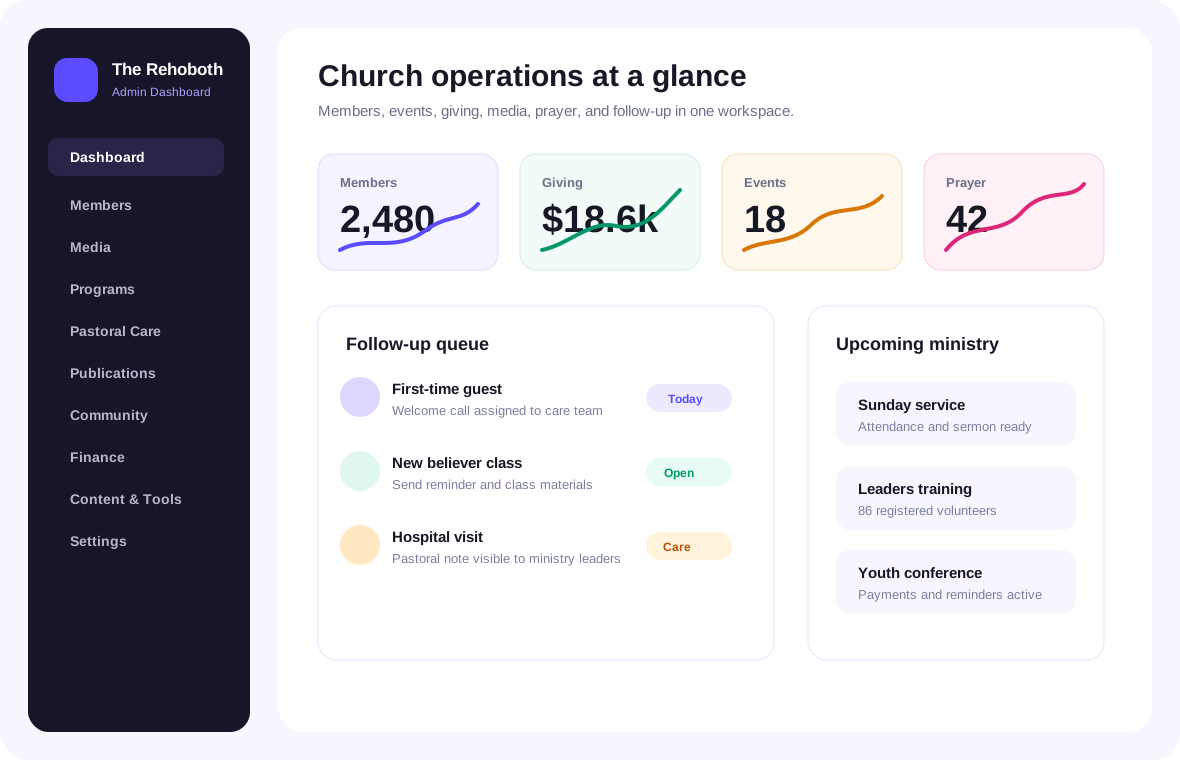
Comparison Checklist
| Capability | Why it matters | How The Rehoboth approaches it |
|---|---|---|
| Member records | People data is the foundation for care, communication, groups, and follow-up. | Profiles, households, branches, groups, contact details, and care context stay connected. |
| Giving and finance | Finance teams need accountability and clear reporting. | Donations, campaigns, accounts, transactions, billing, and finance roles live in one workspace. |
| Events and attendance | Services, classes, and gatherings create pastoral next steps. | Events, registrations, activities, attendance, reminders, and follow-up are linked. |
| Media and publications | Church teaching should remain discoverable after Sunday. | Sermons, livestreams, podcasts, radio, photos, devotionals, articles, books, lyrics, and bulletins can be published. |
| Branch support | Multi-location churches need central visibility and local ownership. | Branch-aware roles, events, reporting, member data, and communication are supported. |
Bottom line
Choose church management software that helps your team act on ministry information, not simply store it.